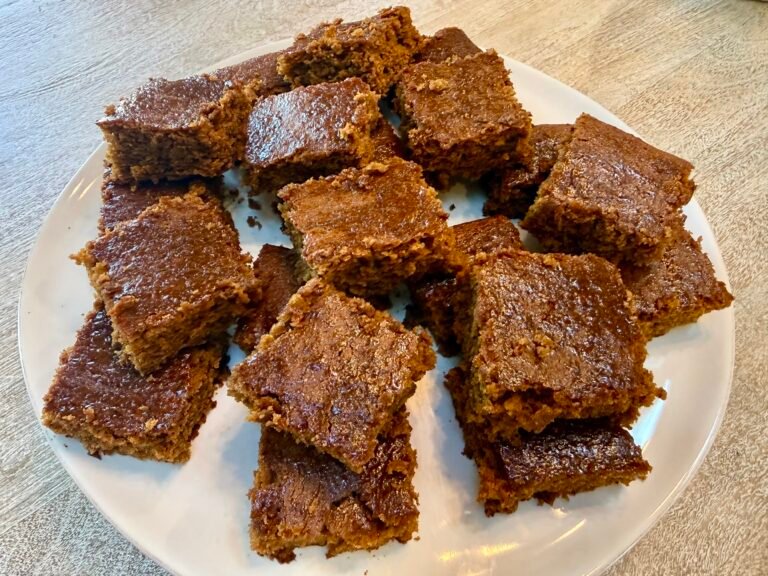
Lemon Drizzle Traybake
Lemon drizzle cake is one of those bakes that immediately takes me back to afternoon teas in England.
I’ve always loved the contrast between the soft, fluffy lemon sponge and that crisp, sugary topping. It is simple, familiar, and very British.
A Very British Cake
The exact origins of lemon drizzle cake are difficult to pin down. Versions of it started appearing in British home kitchens by the 1950s and 1960s. It became one of those wonderfully uncomplicated cakes — perfect for an afternoon tea, for a bake sale, or simply at home alongside a cup of tea.
My Attempts
Lemon drizzle was always an easy cake for me to make back in England. But since moving to Colorado, I’ve struggled to get this recipe right at high altitude. I tried making it several times as a loaf cake. It would rise beautifully in the oven only to sink in the middle as it cooled.
Then I came back to Mary Berry’s famous lemon drizzle traybake. Her version is a British classic, and the traybake format seemed like a much better starting point.
My husband also recently reminded me that lemon cake is his favorite, so I had another good reason to try again.
Why This Version Works at High Altitude
At around 8,600 feet, sponge cakes can rise too quickly before their structure has time to set.
For this recipe, I reduced the sugar and leavening, used a blend of all-purpose and bread flour for a little extra structure, added more milk to keep the crumb moist, and baked it in a slightly hotter oven.
The result is still very much the British lemon drizzle cake I remember, just adapted for an American kitchen at high altitude.
The Lemon-Sugar Topping
This isn’t a smooth glaze or icing, as is more common with American cakes. The topping is simply fresh lemon juice mixed with granulated sugar, spooned over the cake while it is still warm.
Some of the lemon juice sinks down into the sponge, keeping it wonderfully moist and increasing the lemon flavor. Meanwhile, the sugar left on the surface dries into a delicate, crisp topping.
For me, that contrast is what makes a proper lemon drizzle so good: soft sponge underneath, crunchy lemon sugar on top.
Cooling the Cake
One thing I learned while testing this recipe is that the cake is extremely tender while it is warm — especially once the lemon drizzle has soaked into it.
I initially tried lifting it out of the pan and quickly realized the middle wanted to break. So, I simply let it cool completely in the pan and cut it there.
Sometimes the easiest method really is the best one.
Baking at Lower Elevations
This recipe was developed and tested at approximately 8,600 feet in Woodland Park, Colorado.
If you’re baking closer to sea level, I’ve included suggested adjustments in the recipe notes for American ingredients and a standard 13 × 9-inch pan. These haven’t yet been separately tested, so treat them as a starting point.
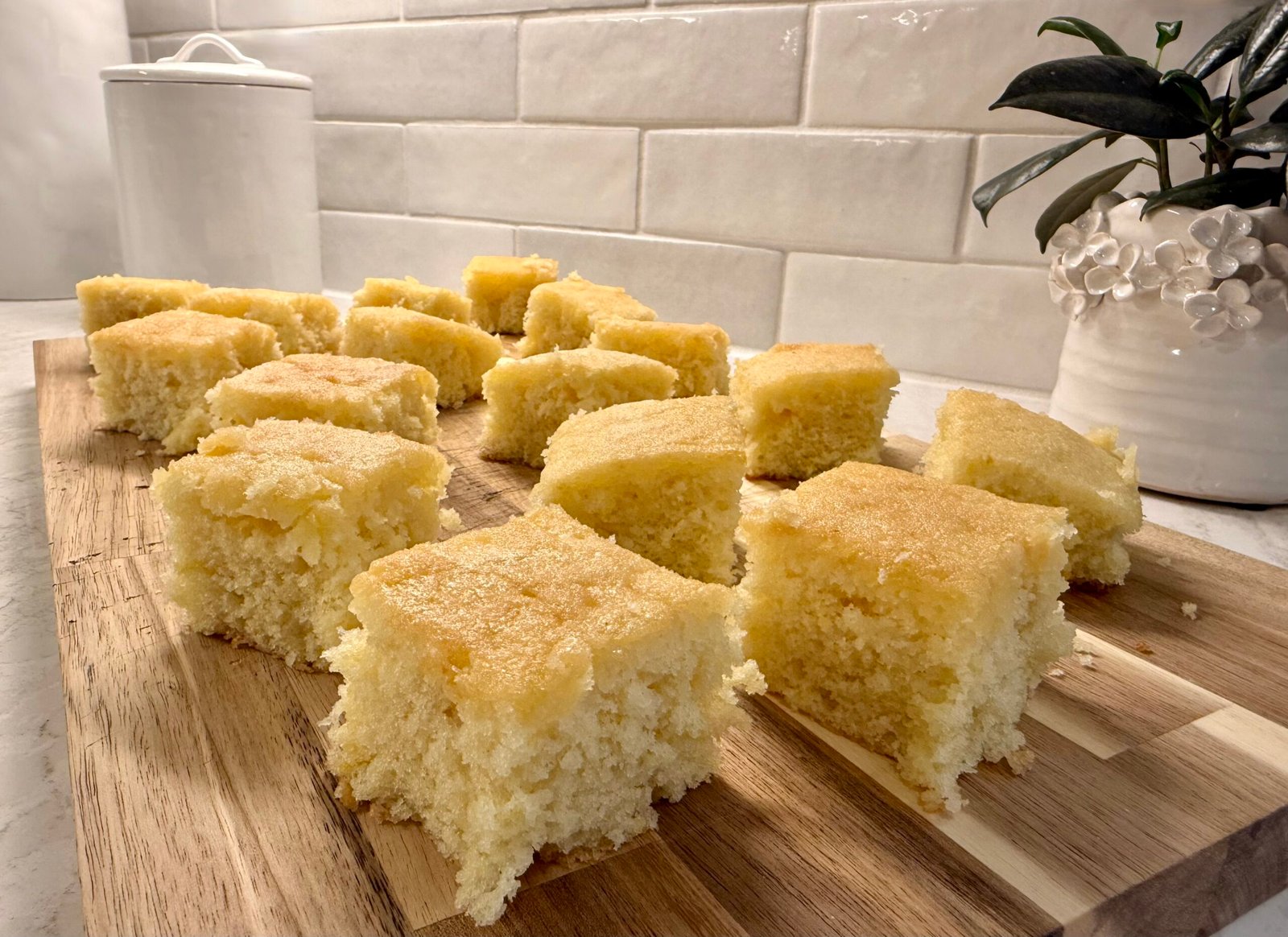
Lemon Drizzle Traybake
Ingredients
Equipment
Method
- Preheat the oven to 365°F conventional. Grease and line a 13 × 9-inch baking pan with parchment paper.
- Beat the softened butter and granulated sugar together for 2–3 minutes, until creamy and slightly lighter in color. Avoid overbeating.
- Whisk together the all-purpose flour, bread flour, baking powder, and salt in a separate bowl.
- Crack the eggs into a separate bowl and whisk until combined.
- Add a small splash of the beaten eggs to the butter and sugar mixture, followed by a spoonful of the flour mixture. Mix briefly after each addition, repeating until all the egg has been incorporated.
- Mix in the finely grated lemon zest.
- Gently fold in the remaining dry ingredients, then stir in the milk until just combined. The batter should be soft, thick, and easily spreadable.
- Spread the batter evenly into the prepared pan, making sure it reaches the corners.
- Bake on the center rack for 24 minutes, or until the center springs back when lightly pressed and a toothpick inserted into the middle comes out clean or with a few moist crumbs.
- While the cake is baking, mix the lemon juice and granulated sugar together. The sugar does not need to dissolve completely.
- As soon as the cake comes out of the oven, prick the surface all over with a skewer or toothpick. Spoon the lemon-sugar mixture evenly over the hot cake.
- Leave the cake to cool completely in the pan. Once cool, cut directly in the pan into pieces.
Notes
Want more recipes like this?
Get new British-inspired recipes and high-altitude baking tips straight to your inbox.