British Flapjacks
When I first moved to the U.S., I was surprised to discover that a flapjack wasn’t necessarily the flapjack I knew from home. Here, the word can mean a pancake — something my American husband had to teach me before I confused too many people!
Growing up in England, flapjacks meant something entirely different: buttery, chewy oat bars made with golden syrup. My mum made them regularly for my dad, and they’re still his favorite.
This recipe brings that familiar British bake to my kitchen in Colorado, using American old-fashioned oats and a few small adjustments for baking at high altitude.
What are British Flapjacks?
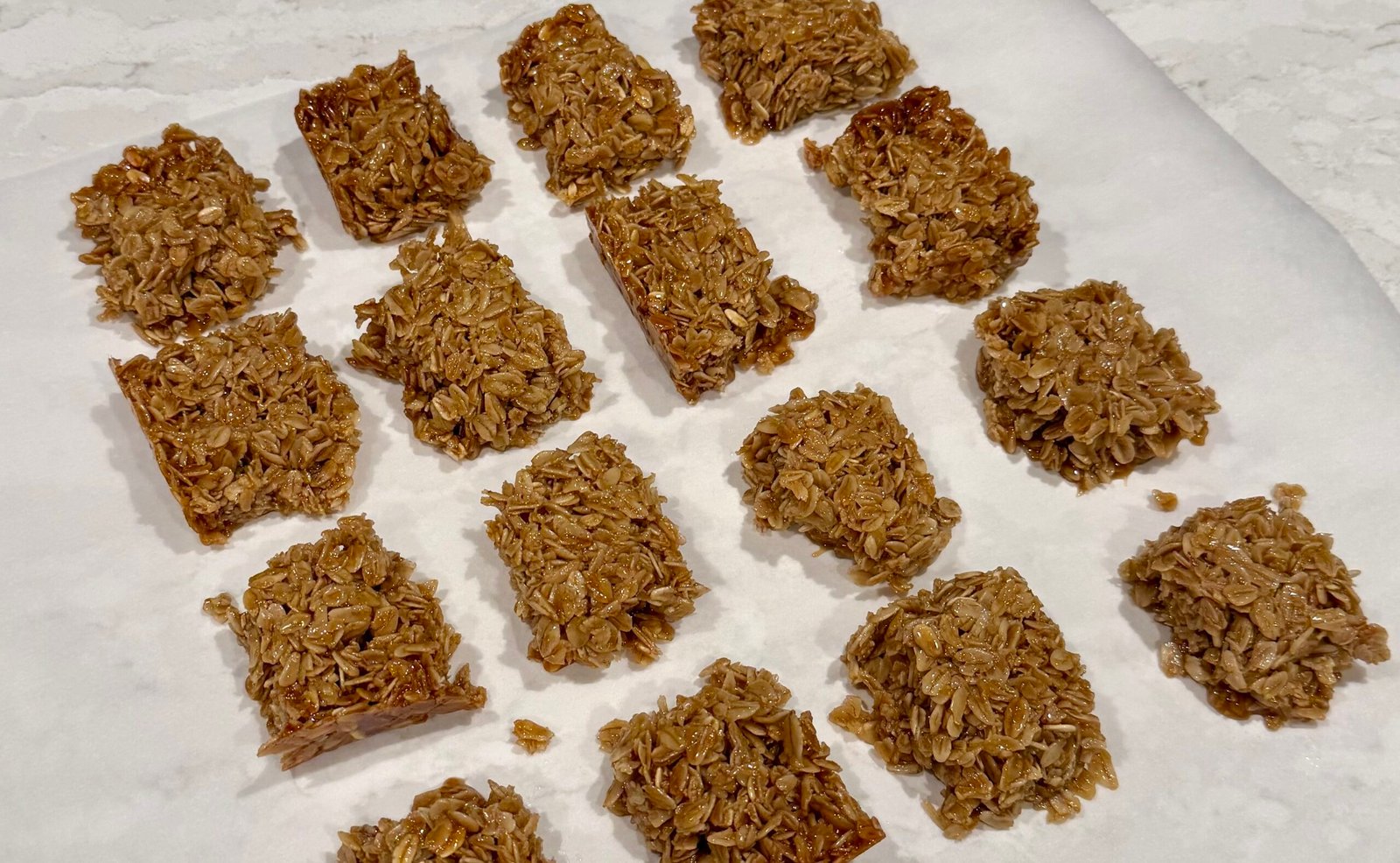
British flapjacks are simple oat bars traditionally made with butter, sugar, golden syrup and oats. They’re sweet and buttery, with a chewy texture and lightly caramelized edges.
Despite the name, they have very little in common with the pancakes sometimes called flapjacks here in America. If you grew up in Britain, these are probably the flapjacks you know: the kind you’d find in lunchboxes, at bake sales, or alongside a cup of tea.
And because they require only a handful of ingredients, the flavor of each one really matters — especially the golden syrup.
Golden Syrup Makes the Difference
For a proper British flapjack, golden syrup is my first choice. It has a rich, buttery caramel flavor that helps give flapjacks their characteristic chewy, slightly sticky texture.
I use British golden syrup, such as Lyle’s, which you can find it in some American grocery stores or online.
If you can’t find golden syrup, light corn syrup can work as a substitute, but the flavor won’t be quite the same and the flapjacks may not hold together quite as well.
Baking Flapjacks at High Altitude
I developed and tested this recipe at approximately 8,600 feet in Woodland Park, Colorado. Flapjacks are much less sensitive to altitude than cakes because there are no eggs or chemical leaveners to worry about, but faster moisture loss can still affect their texture.
For this version, I use a generous amount of golden syrup and keep the baking time relatively short. The key is not to wait until the flapjacks feel firm in the oven. Take them out when the edges are golden and the center is set but still slightly soft. They’ll firm considerably as they cool.
If you’re baking closer to sea level, you can still use the recipe as written. You may simply find that yours need a few additional minutes in the oven.
British Flapjacks
Ingredients
Equipment
Method
- Preheat the oven to 350°F (175°C). Line a 9-inch (23 cm) square baking pan with parchment paper, leaving enough overhang to lift the flapjack out once cooled.
- Add the butter, light brown sugar, golden syrup and salt to a heavy-bottomed saucepan. Heat gently over low heat, stirring occasionally, until the butter has melted and the mixture is smooth. Avoid bringing the mixture to a boil.
- Remove the saucepan from the heat. Add the rolled oats and stir thoroughly until all of the oats are evenly coated in the butter and golden syrup mixture.
- Transfer the mixture to the prepared pan. Spread it evenly into the corners, then press it down firmly using the back of a spoon or the bottom of a glass.
- Bake on the center rack for approximately 20–25 minutes. The edges should be golden and set and the top should be an even golden color. The center may still look slightly soft when the flapjack is removed from the oven; it will continue to set as it cools.
- Place the entire pan on a wire cooling rack and leave the flapjack in the pan until completely cool, approximately 2–3 hours. It is fragile while warm and needs time for the butter and sugars to cool and set.
- Once completely cool and firm, use the parchment paper to lift the slab from the pan. Cut into squares and serve.
Notes
Want more recipes like this?
Get new British-inspired recipes and high-altitude baking tips straight to your inbox.