Victoria Sponge Cake
Victoria sponge is a cake that immediately takes me back to England. It’s simple, familiar, and delightfully British.
There really isn’t much to it: two soft, buttery sponge layers, a generous layer of jam, and a light dusting of powdered sugar. But that simplicity means the sponge itself has to be just right.
After adjusting the classic proportions for both high-altitude baking and American ingredients, this recipe gave me exactly what I was looking for: a light, soft sponge with an even rise, a tender crumb, and the flavor and texture I remember from England.
A Very British Cake
Victoria sponge, also known as a Victoria sandwich, is one of the best-known cakes in British baking. It takes its name from Queen Victoria and became closely associated with the Victorian tradition of afternoon tea.
The cake also emerged during an important period in baking history. Alfred Bird developed an early form of baking powder in 1843, helping bakers create lighter and more reliably risen cakes. By 1861, Mrs Beeton had published a recipe for “Victoria Sandwiches,” made with equal proportions of eggs, sugar, butter, and flour and filled with preserves.
Adapting Victoria Sponge for My Mountain Kitchen
British recipes traditionally use self-raising flour, which isn’t readily available here. For this version, I use American all-purpose flour with a small amount of bread flour for extra strength. At high altitude, that added structure helps the cake hold its rise without making the sponge heavy or chewy.
I also reduced the sugar and leavening, added extra milk for moisture, and increased the oven temperature slightly so the sponge can set before it has a chance to collapse.
The result is still unmistakably a Victoria sponge — just one adapted for my Colorado kitchen.
For more information on how elevation affects baking, see my Kitchen Guides.
How to Fill a Victoria Sponge
For the most traditional version, I use raspberry jam and finish the top with a light dusting of sugar. Strawberry jam also works beautifully.
You’ll often see modern Victoria sponges filled with whipped cream or buttercream as well, but I prefer the simpler jam-only version. It lets the flavor and texture of the sponge really stand out.
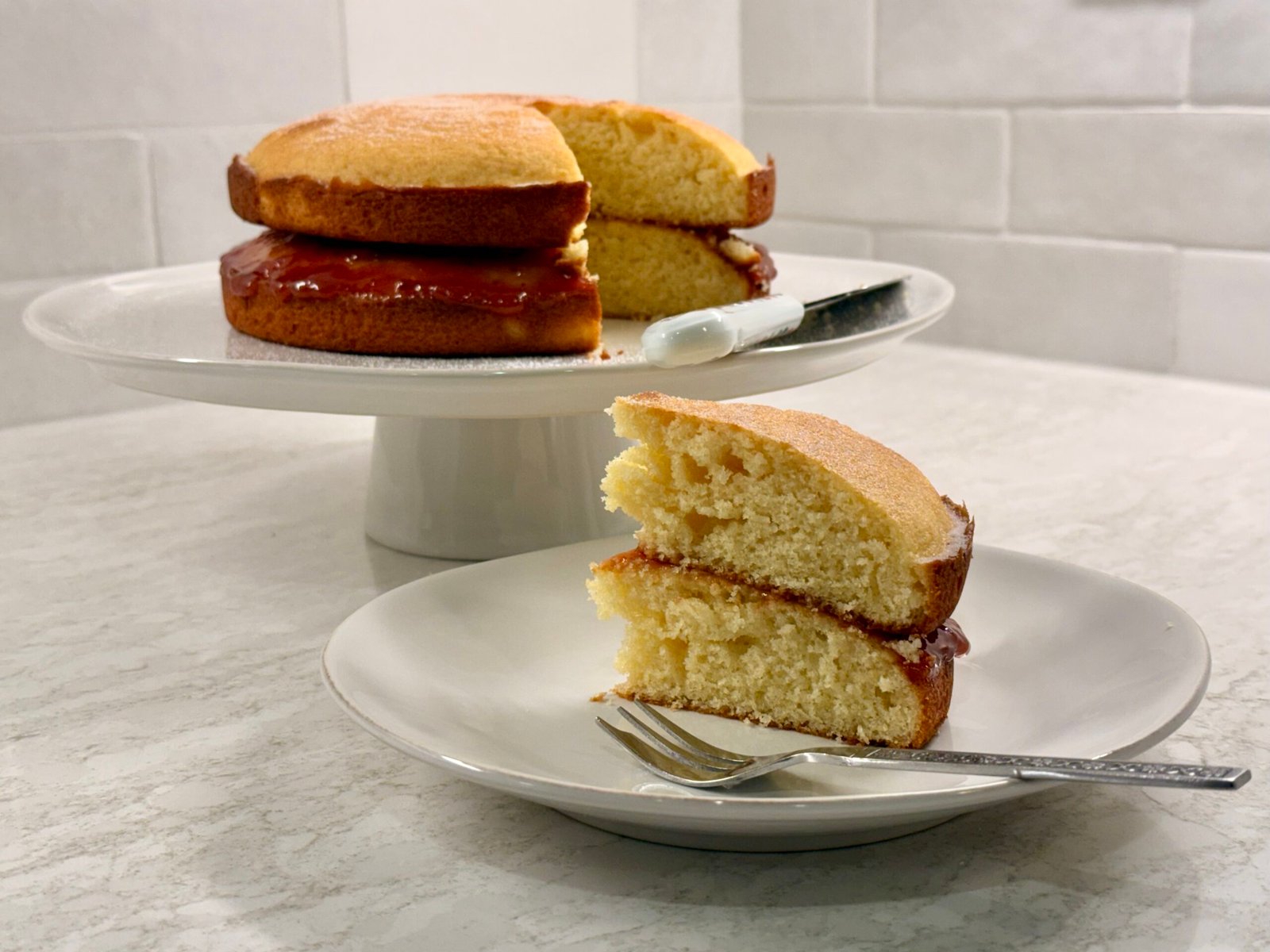
Victoria Sponge Cake
Ingredients
Equipment
Method
- Preheat the oven to 365°F conventional. Grease two 8-inch round cake pans and line the bottoms with parchment paper.
- Beat the softened butter and sugar together for 2–3 minutes, until creamy and lighter in color.
- While the butter and sugar are mixing, whisk together the all-purpose flour, bread flour, baking powder, and salt in a separate bowl.
- Crack the eggs into another bowl, add the vanilla extract, and whisk until combined.
- Add a small splash of the beaten eggs and vanilla to the butter and sugar mixture, followed by a spoonful of the flour mixture. Mix briefly after each addition, repeating until it has all been incorporated.
- Gently fold in the remaining dry ingredients, then stir in the milk until just combined. The batter should be soft and thick but should drop easily from a spoon or spatula.
- Divide the batter evenly between the prepared pans and gently level the tops.
- Bake on the center rack at 365°F for 22-24 minutes, or until the centers spring back when lightly pressed and a toothpick inserted into the middle comes out clean or with a few moist crumbs.
- Leave the cakes in the pans for about 10 minutes, then turn them onto a wire rack and allow them to cool completely.
- Place one sponge layer on a serving plate and spread generously with raspberry or strawberry jam. Place the second sponge on top.
- Dust lightly with sugar before serving.
Notes
Want more recipes like this?
Get new British-inspired recipes and high-altitude baking tips straight to your inbox.