British Crumpets
British crumpets were always a staple in our kitchen growing up. We’d have them for breakfast, as an afternoon snack, or even for supper before bed. Nothing beats a warm, toasted crumpet with plenty of melted butter.
Since moving to Colorado, proper British crumpets have been one of the things I’ve missed most. They’re not something I can simply pick up at the supermarket like I could back home, and I’ve never quite found anything that compares to the Warburtons crumpets I grew up with.
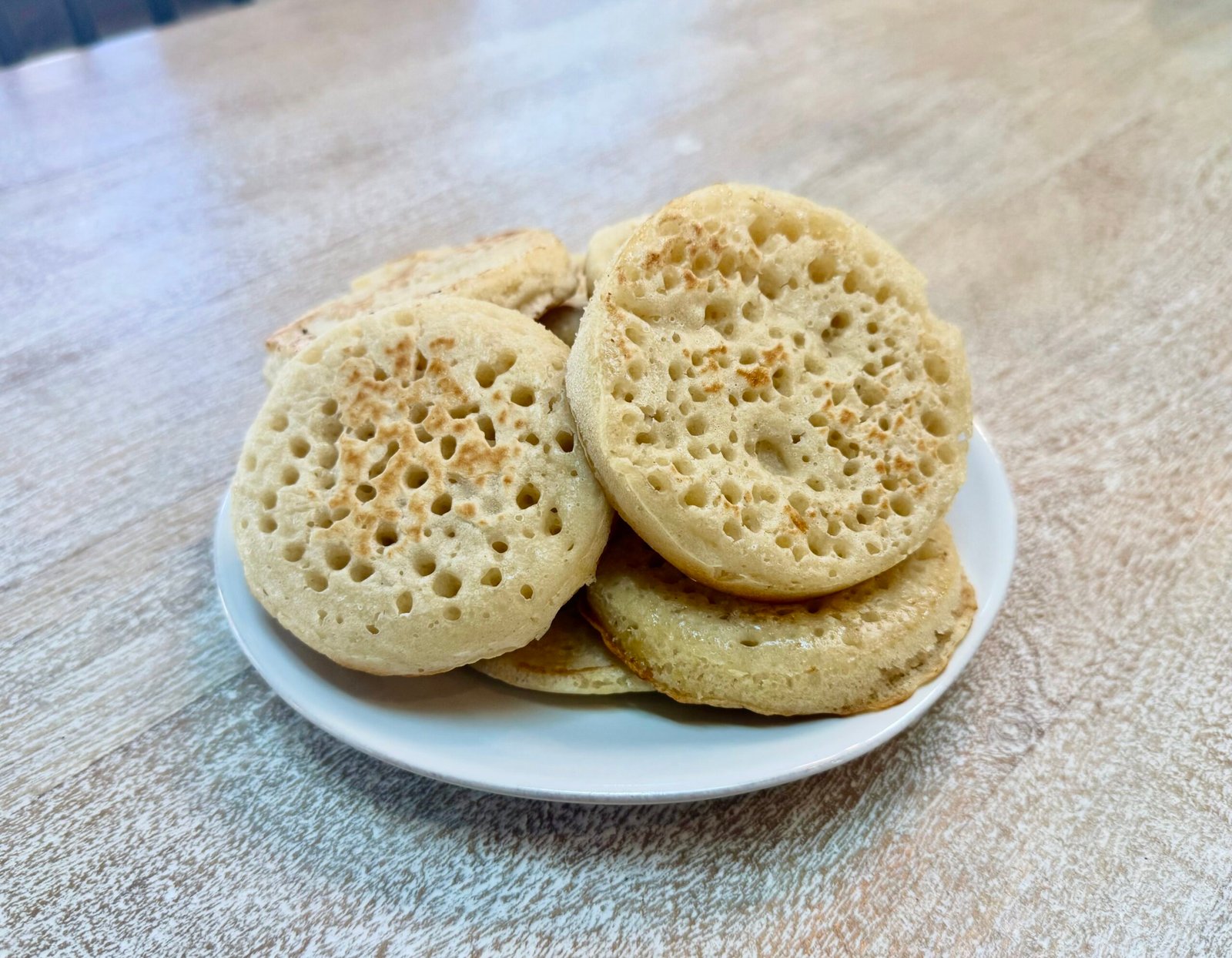
So I set out to make my own, developing a British crumpet recipe that works at approximately 8,600 feet in my Woodland Park kitchen. After a little experimenting, I finally achieved what I’d been missing: soft, spongy crumpets with those familiar little holes, perfect for soaking up plenty of melted butter.
What Are British Crumpets?
Crumpets are a classic British griddle bread, made from a simple yeast batter and cooked in round metal rings. They’re known for their soft, slightly chewy texture and distinctive holes across the top.
Unlike English muffins, which are made from a firmer dough and usually split before toasting, crumpets are made from a much wetter batter. As they cook, bubbles rise to the surface and burst, leaving little holes that are perfect for catching melted butter.
They’re traditionally cooled and then toasted before serving, giving them a lightly crisp exterior while keeping the inside soft and spongy.
Making Crumpets at High Altitude
This recipe was developed and tested in my kitchen in Woodland Park, Colorado, at approximately 8,600 feet above sea level.
High-altitude baking can be tricky, especially with yeast-based batters. The lower air pressure affects how gases expand, while moisture evaporates more readily. With crumpets, getting the right balance of hydration, fermentation, and cooking temperature is particularly important.
My first batch had the familiar crumpet flavor I remembered, but the texture was a little too bread-like, with fewer of those characteristic holes on top. For my second batch, I increased the water slightly, adjusted how I incorporated the yeast and baking powder, and experimented with how much batter to use in each ring.
The difference was noticeable. The crumpets developed more open holes, with a softer, spongier interior that tasted much closer to the Warburtons crumpets I grew up with, especially after cooling and toasting.
Baking at a lower altitude? This recipe has been tested at approximately 8,600 feet, so I can’t guarantee identical results closer to sea level. You may need to adjust the leavening and fermentation time to account for the different conditions. Check out my Kitchen Guides to learn more about high-altitude baking.
Tips for Perfect Homemade Crumpets
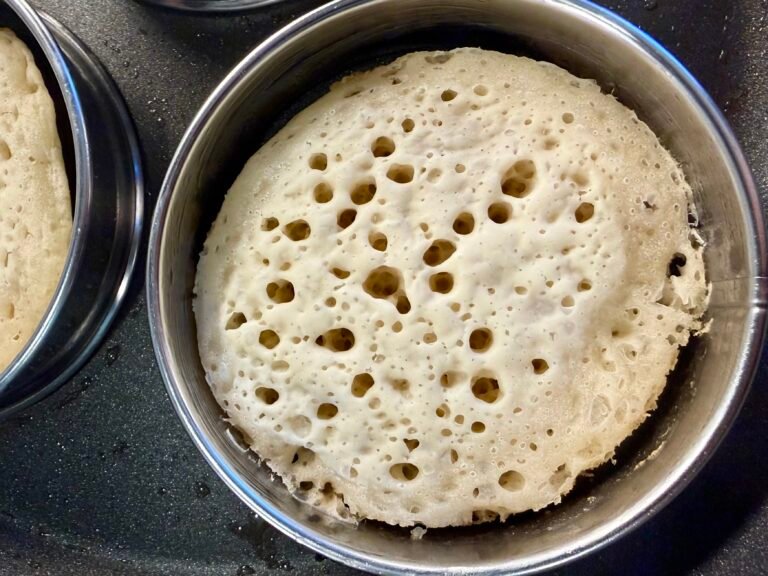
Use a wet, pourable batter. Crumpet batter is much looser than bread dough. This allows bubbles to rise through the mixture and burst at the surface, creating those characteristic holes.
Watch the batter as it ferments. It should become visibly bubbly and slightly aerated, but there’s no need to let it double in volume. At high altitude, the batter may be ready sooner than you expect.
Don’t overfill the rings. I use 4-inch English muffin rings and fill them approximately one-third full. The batter expands as it cooks, so leaving plenty of room helps prevent overly thick, bread-like crumpets.
Keep the heat gentle and steady. You want the tops to develop plenty of holes and cook through without the bottoms becoming too dark. Allow the bubbles to stop forming and the tops to become mostly set before flipping briefly.
Cool before toasting. This makes a real difference to the finished texture. Freshly cooked crumpets can seem a little soft or doughy, but once cooled and toasted, they develop that familiar lightly crisp exterior and spongy center.
How to Serve British Crumpets
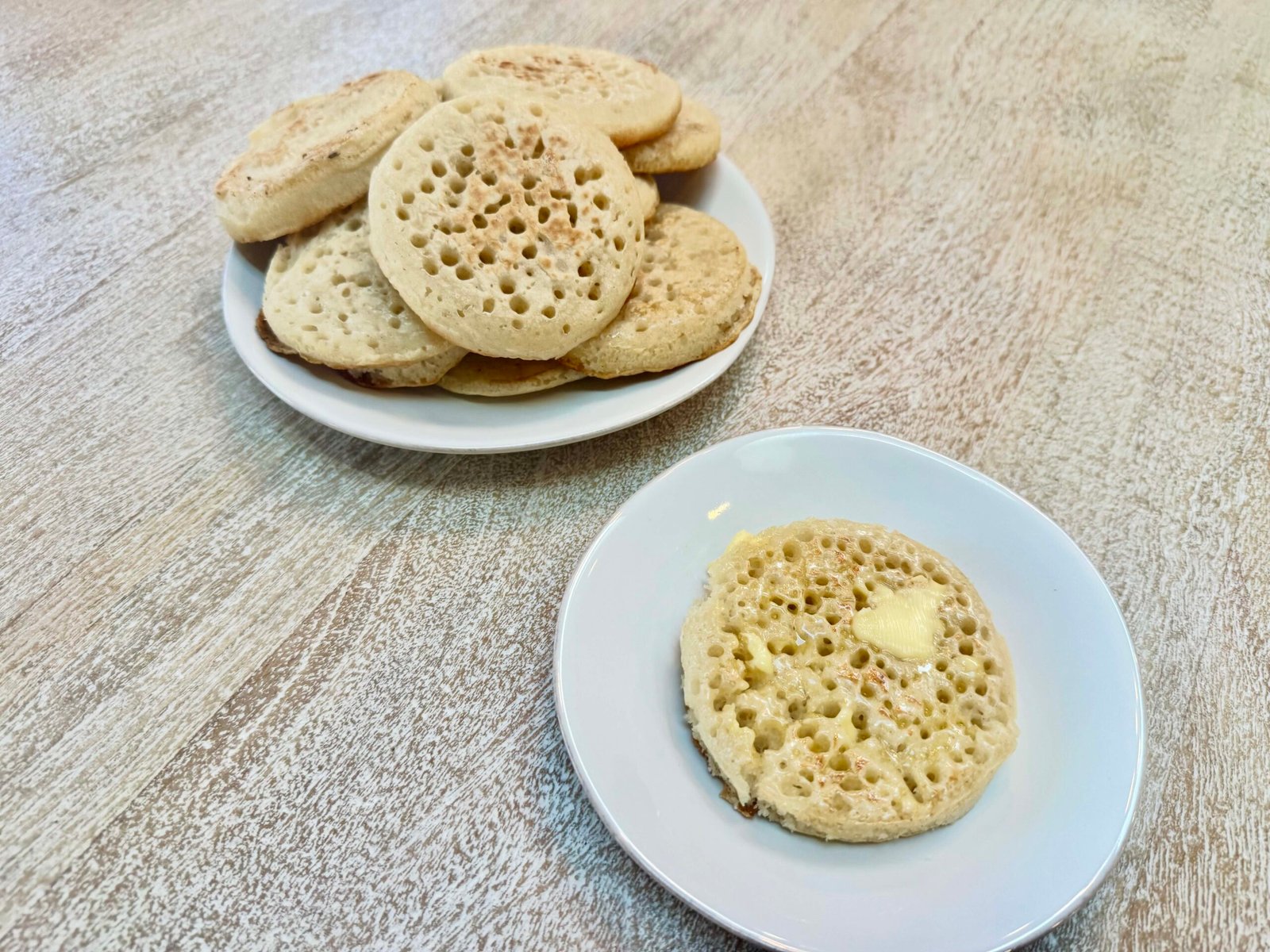
For me, nothing beats a freshly toasted crumpet with plenty of salted butter. The butter melts into all those little holes, which is really the best part!
But there are plenty of other ways to enjoy them:
- Salted butter: The classic, and still my favorite.
- Marmite: A wonderfully savory British option, especially with butter underneath.
- Jam: Raspberry or strawberry jam makes a lovely sweet alternative.
- Golden syrup: Delicious drizzled over a warm, buttered crumpet.
Crumpets are just as good for a quick breakfast as they are for an afternoon snack or something warm and comforting in the evening.
British Crumpets
Ingredients
Equipment
Method
- In a small bowl, combine the active dry yeast, sugar, and 60 ml (¼ cup) of the measured water, warmed to 100–105°F. Leave for 5–10 minutes, until creamy and foamy.
- In a large mixing bowl, combine the flour, salt, and remaining water. Whisk vigorously for 4–5 minutes, until smooth and slightly elastic.
- Cover and rest the batter for 5 minutes to allow the flour to hydrate.
- Pour in the activated yeast mixture and whisk until thoroughly incorporated.
- Cover and leave at room temperature (approximately 70°F) for around 20–30 minutes, until the batter is visibly bubbly and aerated. It does not need to double in volume.
- Lightly grease a large nonstick skillet and the insides of your 4-inch crumpet or English muffin rings. Preheat over low to medium-low heat.
- Sprinkle the baking powder over the batter and whisk gently but thoroughly until evenly incorporated.
- Place the rings in the warm skillet and spoon a shallow layer of batter into each ring, approximately ¼ inch deep. Avoid overfilling, as the batter will rise considerably as it cooks.
- Cook for approximately 6–8 minutes, until bubbles have risen and burst across the surface.
- Carefully remove the rings and briefly flip the crumpets for 15–30 seconds to set the tops.
- Transfer to a wire rack and allow to cool completely. Toast until lightly golden and crisp outside, then serve warm with butter or your favorite topping.
Notes
Want more recipes like this?
Get new British-inspired recipes and high-altitude baking tips straight to your inbox.