Bread and Butter Pudding
Bread and butter pudding is a wonderfully comforting British dessert that turns a few simple ingredients into something rather special. Layers of generously buttered bread, golden raisins, and creamy vanilla custard are baked until golden, with lightly crisp edges and a beautifully soft center.
Growing up in Yorkshire, I was taught not to waste perfectly good food, and bread and butter pudding is a lovely example of making the most of what you have. It’s traditionally a way to use up stale bread, and for this recipe, I actually used homemade sourdough sandwich bread that I’d saved in the freezer. After thawing and drying it slightly, it was perfect for soaking up the custard.
Adding fresh lemon zest, cinnamon, and nutmeg gives this pudding a lovely warmth, while the golden raisins add little bursts of sweetness. Served warm with a splash of cold pouring cream or traditional British custard, it’s simple, nostalgic, and thoroughly delicious.
What Is Bread and Butter Pudding?
Bread and butter pudding is a classic British dessert made by layering slices of buttered bread with dried fruit, then soaking them in an egg custard before baking.
The top becomes golden and lightly crisp, while the bread underneath softens into a beautifully creamy pudding. Traditionally made with ordinary white bread, it’s a simple dessert that has remained a British favorite for generations.
Although it’s similar to American bread pudding, there are a few differences. American versions often use cubes or chunks of bread mixed with a sweeter custard. British bread and butter pudding typically keeps the bread in recognizable slices or triangles, buttered and arranged in overlapping layers.
Tips for the Best Bread and Butter Pudding
Choose the right bread. Slightly stale white sandwich bread works beautifully because it absorbs the custard while retaining some structure. I used homemade sourdough sandwich bread, but an ordinary white loaf is just as suitable. If your bread has been frozen, thaw it completely and dry it briefly in a low oven or air fryer if it’s particularly soft.
Be generous with the butter. Butter is an essential part of this pudding, and I like to spread it generously over both sides of the bread. It adds a lovely richness and helps create those golden, lightly crisp edges.
Keep the crusts on or take them off. This is entirely a matter of preference. I kept mine on, partly because I don’t like wasting good bread, and they added a lovely texture to the finished pudding. If you prefer something softer throughout, you can remove them.
Use golden raisins. In Britain, we’d traditionally use sultanas, and golden raisins are a readily available alternative here in the US. They add just enough sweetness and texture without overpowering the custard. You can also use regular raisins or currants.
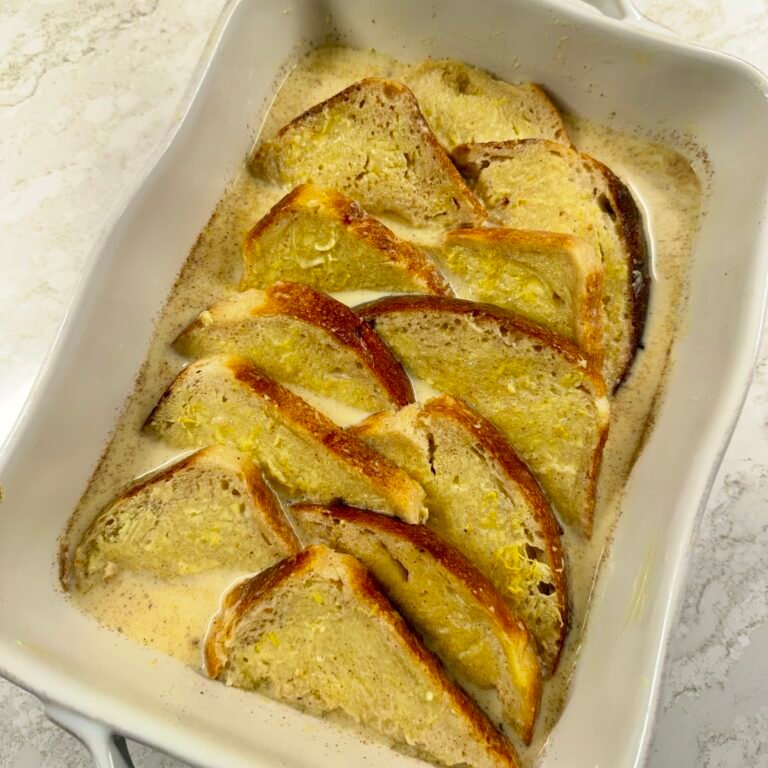
Give the bread time to soak. Allowing the bread to sit in the custard for about 20 minutes helps it absorb the liquid and soften before baking. Gently press down any exposed pieces to make sure they’re moistened.
Cover the pudding at the beginning of baking. Covering the dish loosely with foil for the first 25 minutes helps prevent the exposed bread from browning before the custard has time to set. Remove the foil for the final 20 minutes to develop a beautifully golden top with lightly crisp edges.
Don’t overbake the custard. The pudding is ready when the top is golden and the custard is softly set, with a slight wobble in the center. It should be wonderfully moist and creamy rather than firm or dry.
Serving and Storing Bread and Butter Pudding
Bread and butter pudding is best served warm, after resting for about 10–15 minutes out of the oven.
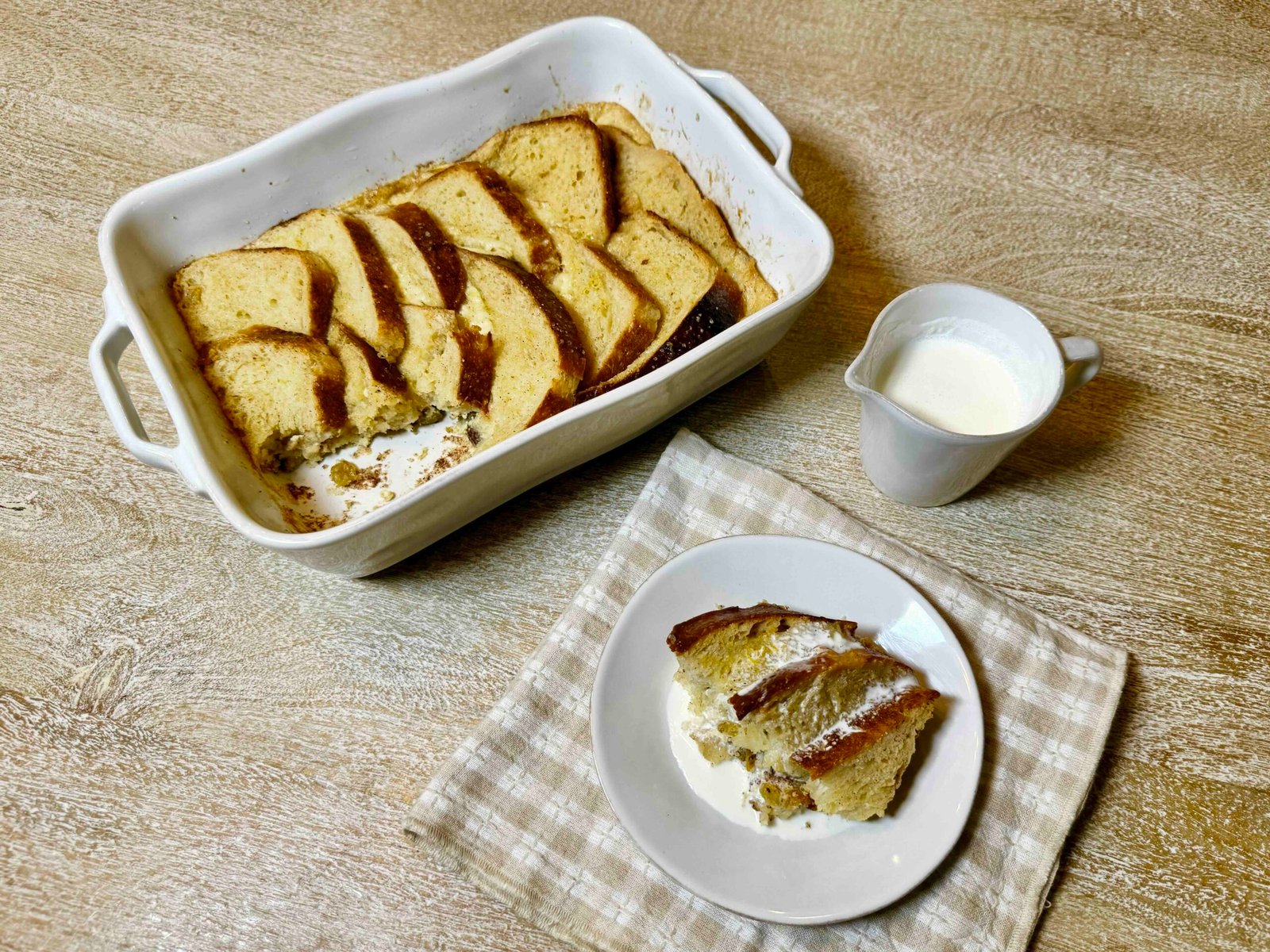
My favorite way to enjoy it is with a little cold pouring cream, which contrasts beautifully with the warm, softly spiced pudding. Traditional British custard is another lovely choice, although a scoop of vanilla ice cream is delicious too.
If you have leftovers, allow them to cool and refrigerate, covered, within two hours of baking. They’ll keep for up to 3–4 days in the refrigerator.
To reheat, warm individual portions in the microwave, or place them in an ovenproof dish, cover loosely with foil, and heat at 325°F (165°C) until heated through. The topping will soften during storage, but the pudding is still lovely the next day.
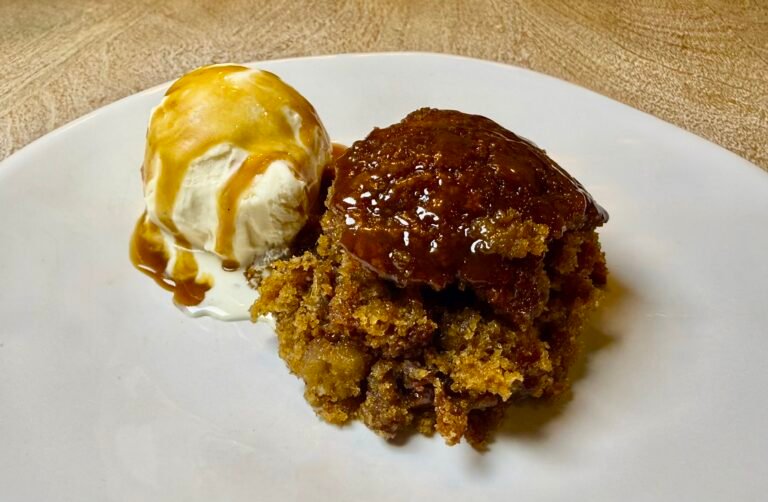
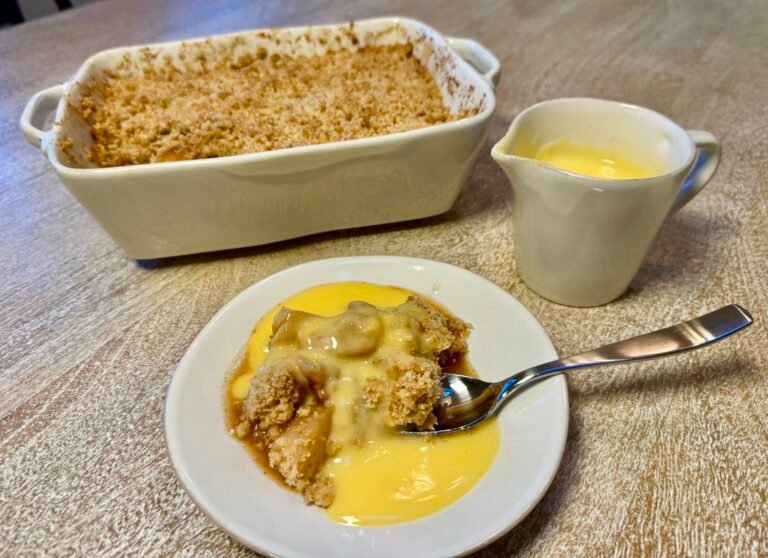
If you enjoy traditional British desserts, you might also like my Sticky Toffee Pudding, with its rich toffee sauce, or my Apple Crumble, another comforting favorite that’s especially lovely served warm with custard.
Bread and Butter Pudding
Ingredients
Equipment
Method
- Lightly grease a 10 × 8-inch baking dish with butter. Generously butter both sides of each bread slice, then cut into triangles or pieces that fit comfortably in the dish. Arrange the bread in the prepared dish, slightly overlapping.
- Toss the golden raisins with the lemon zest and scatter over the bread, tucking most of the fruit between the slices.
- Combine the milk and cream in a saucepan over medium-low heat. Warm gently to approximately 120–130°F (49–54°C), without allowing it to boil.
- In a large bowl, whisk together the eggs, sugar, vanilla extract, cinnamon, and nutmeg. Gradually pour in the warm milk mixture, whisking continuously until combined.
- Pour the custard evenly over the bread, ensuring the layers are thoroughly moistened. Gently press down the bread to help it absorb the liquid. Leave to soak for 20 minutes.
- While the bread is soaking, preheat the oven to 350°F (175°C), with a rack positioned in the middle.
- If desired, sprinkle the demerara sugar evenly over the pudding. Cover loosely with aluminum foil, tenting it slightly above the bread. Bake for 25 minutes.
- Carefully remove the foil and continue baking for approximately 20 minutes, or until the top is golden brown and lightly crisp, and the custard is softly set. The center should have a slight wobble but no visible liquid custard.
- Remove from the oven and allow to rest for 10–15 minutes before serving warm with cold pouring cream, traditional British custard, or vanilla ice cream.
Notes
Want more recipes like this?
Get new British-inspired recipes and high-altitude baking tips straight to your inbox.