Custard Creams
Custard creams are my favorite British biscuits. Whether they were McVitie’s or supermarket own-brand versions from places like Asda or Sainsbury’s, they were a familiar part of my biscuit tin back in England.
Because they’re not as easy to find here in the U.S., I set about to make my own! The filling is a little more generous than you’d find in a packet biscuit, giving them a slightly more indulgent sandwich-cookie feel while still tasting unmistakably like the custard creams I grew up with.
What Are Custard Creams?
Custard creams are a classic British sandwich biscuit made with two pale, custard-flavored biscuits and a creamy filling.
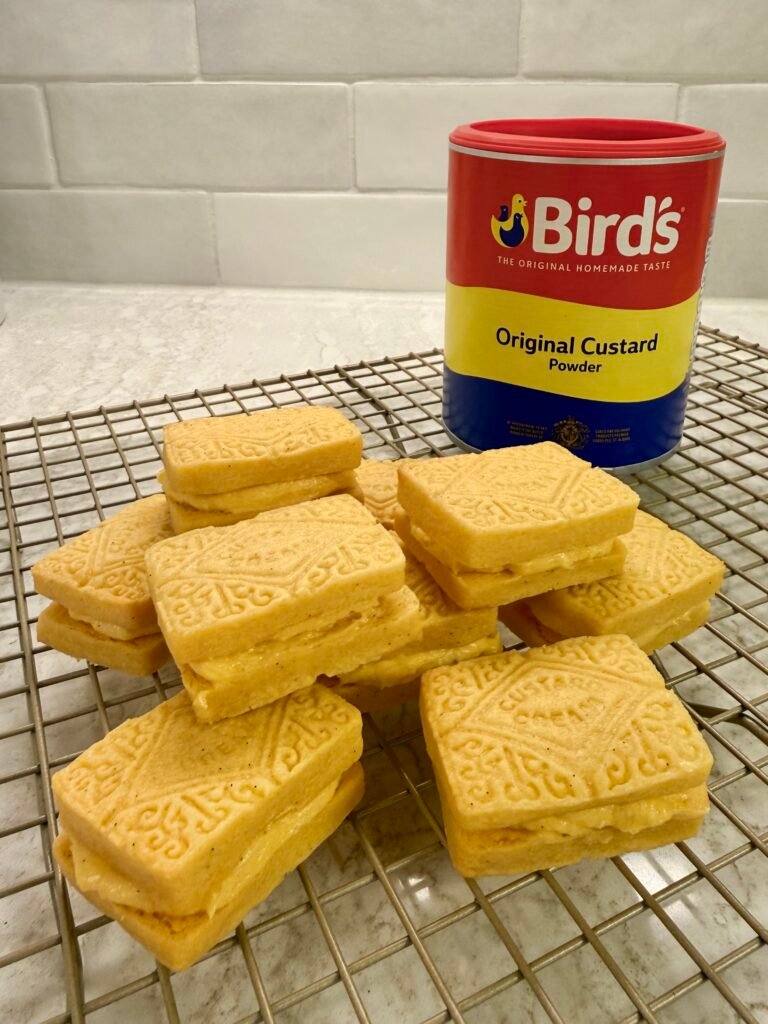
Their distinctive flavor comes from custard powder, which gives both the biscuits and filling that familiar vanilla-custard taste. I use Bird’s Custard Powder, the traditional British version, which is also easy to find online in the US.
The custard filling is made with butter, powdered sugar, Bird’s Custard Powder, milk, and vanilla, giving it a smooth texture and a more pronounced custard flavor. It’s rather indulgent! And my husband declared that he wants this filling instead of frosting in all the other cakes I make him!
British Baking, American Ingredients
One of the things I enjoy about recreating British recipes here in the US is working out which ingredients really matter and which can be easily adapted.
For these custard creams, I think Bird’s Custard Powder is worth using. It gives the biscuits their traditional flavor and pale yellow color, and it is readily available in the US.
I also use caster sugar in the biscuit dough. Its finer texture blends easily into the butter and helps give the biscuits their tender, fine crumb. If you can’t find caster sugar, granulated sugar will also work, although the texture may be slightly different.
Rolling and Cutting the Biscuits
The dough should be rolled to about 4 mm thick, roughly the thickness of two US nickels stacked together. A very light dusting of custard powder can be used instead of flour when rolling, just enough to prevent sticking.
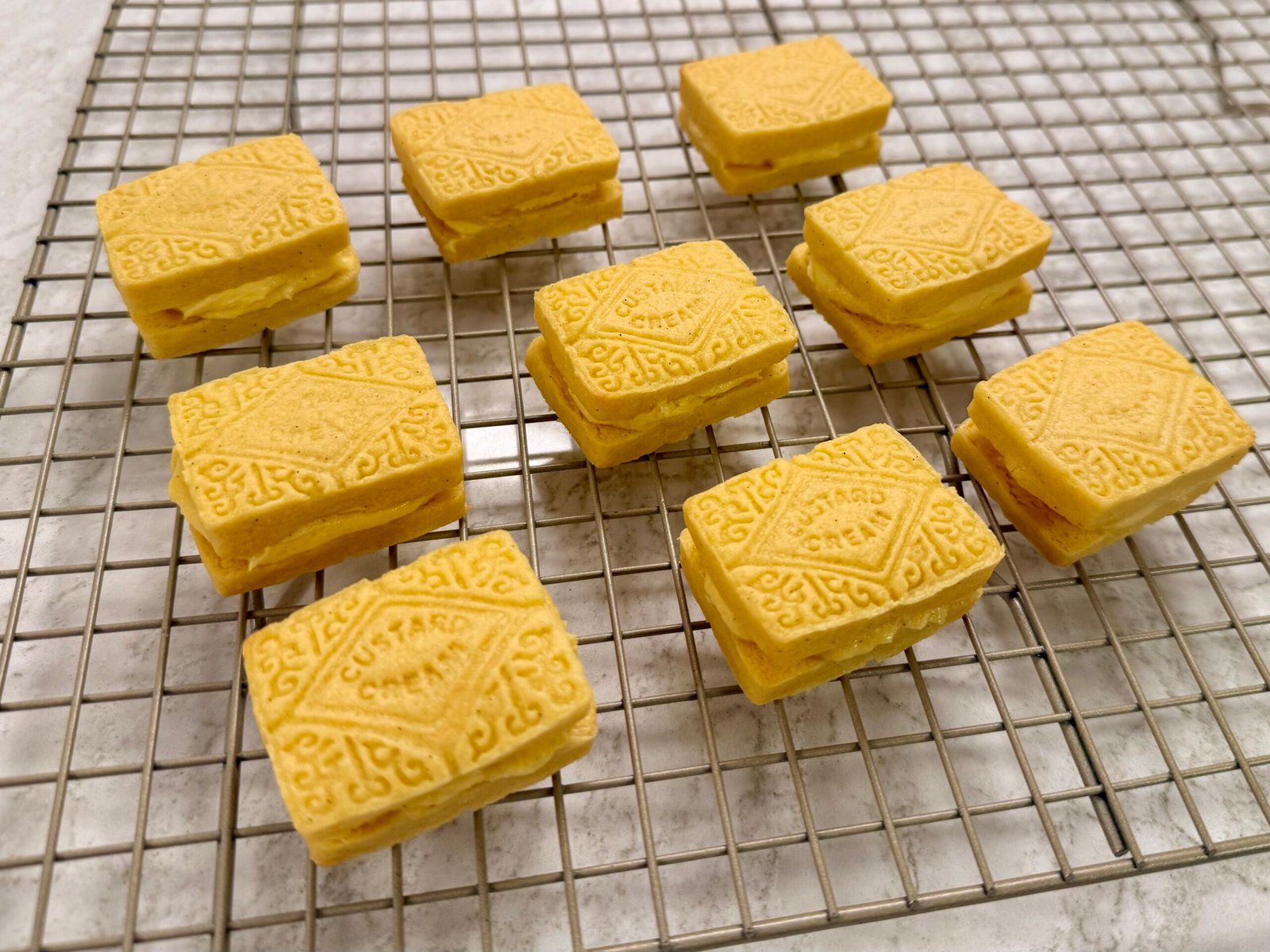
I use a traditional custard cream cutter and stamp to create the familiar embossed pattern, but you don’t need one. A small rectangular cookie cutter works perfectly well too.
And once the biscuits are cut and stamped, make sure you chill them again briefly before baking. This helps firm the butter back up and keeps the biscuits from spreading too much in the oven, which is especially useful if you’re using an embossed stamp.
Baking Custard Creams at High Altitude
This recipe was developed and tested at approximately 8,600 feet in Woodland Park, Colorado.
Because they contain no baking powder or baking soda, custard creams are not particularly sensitive to altitude. The main things I focused on were controlling spread, keeping the stamped design defined, and making sure the biscuits stayed tender rather than drying out.
If you’re baking at a substantially lower elevation, the recipe should still work well. They may need slightly longer in the oven, but use their appearance as your guide: the biscuits should be mostly pale, with just a hint of color around the edges.
How to Store Custard Creams
If they last longer in your house than they did in mine, you can store the filled custard creams in an airtight container at room temperature for up to 5 days.
They have their best texture during the first couple of days, then gradually soften as the filling sits between the biscuits.
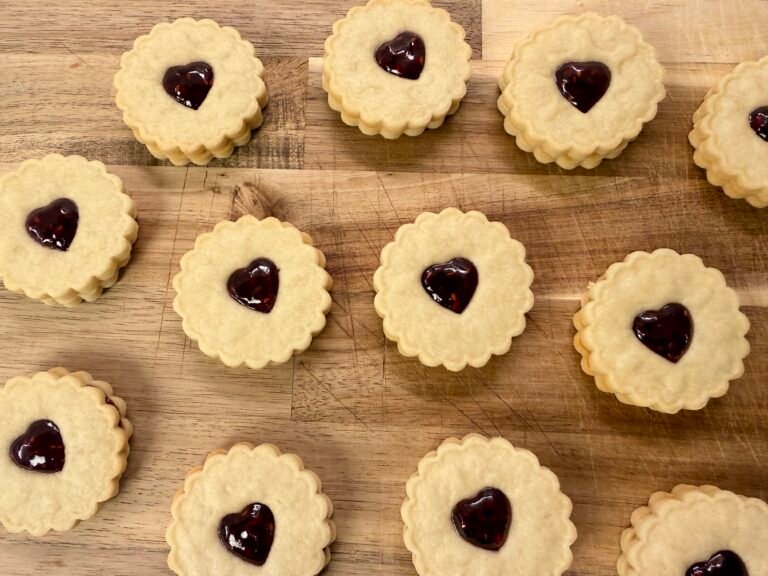
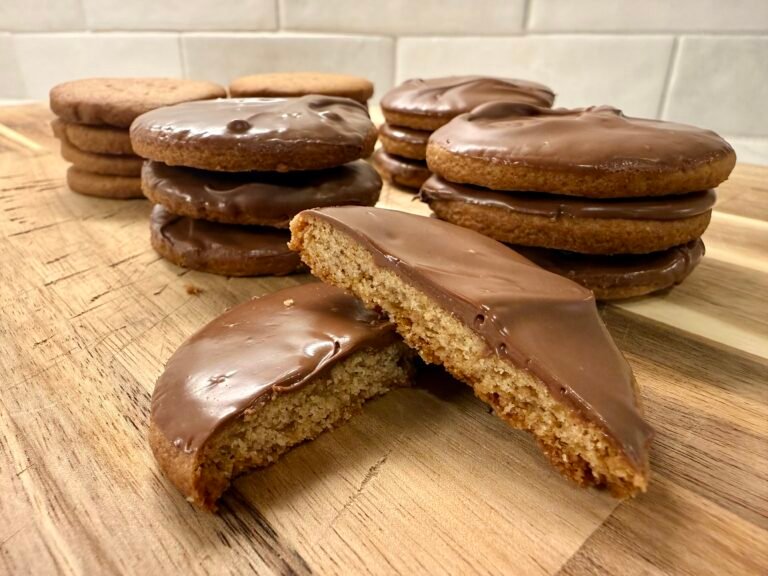
If you enjoy recreating classic British biscuits at home, you might also like my Jammy Dodgers, British Digestive Biscuits, or Iced Gems.
British Custard Creams
Ingredients
Equipment
Method
- Beat the butter and sugar together for 1½–2 minutes, until smooth and creamy but not very pale or fluffy.
- Add the egg yolk and vanilla and beat just until combined.
- In a separate bowl, whisk together the all-purpose flour and custard powder. Add to the butter mixture and mix in until crumbly and beginning to come together.
- Add the milk and mix just until a dough forms. Avoid overmixing.
- Flatten the dough into a disc, wrap well, and refrigerate for 45–60 minutes.
- Roll the dough to about 4 mm thick (roughly the thickness of two stacked US nickels) on a surface very lightly dusted with custard powder. Cut with a custard cream cutter or small rectangular cookie cutter. If using a stamp, press the design firmly into each biscuit.
- Transfer the biscuits to a parchment-lined baking sheet and refrigerate for 10–15 minutes, or until firm.
- Preheat the oven to 340°F conventional. Bake on the middle rack for about 13-15 minutes, until the tops are dry and set and the biscuits remain mostly pale with just a hint of color around the edges.
- Leave the biscuits on the baking sheet for 5 minutes, then transfer to a wire rack to cool completely.
- Warm the milk until hot to the touch but not boiling.
- Whisk in the custard powder until smooth, then allow the mixture to cool to room temperature.
- Beat the softened butter until smooth and creamy.
- Add the powdered sugar, vanilla, and cooled custard mixture to the butter. Beat until smooth and creamy.
- Spoon about 1 teaspoon of filling onto the center of the flat side of one biscuit.
- Top with another biscuit and press down gently until the filling spreads toward the edges.
- Repeat with the remaining biscuits.
Notes
Want more recipes like this?
Get new British-inspired recipes and high-altitude baking tips straight to your inbox.