British Cheese Scones
British cheese scones are a simple savory bake that never needs much fuss. They’re buttery, cheesy and best eaten slightly warm, preferably with a generous spread of butter.
They also happen to be my dad’s favorite type of scone, so they’ve always had a particularly special place in our family. Made with plenty of mature cheddar and a little extra cheese melted over the top, they’re the sort of bake that rarely lasts long once they come out of the oven.
These are the savory cousin of my Classic British Scones, but with a rich, cheesy flavor and no added sugar. I’ve adapted them to use ingredients readily available in an American grocery store and tested them here in my Colorado mountain kitchen at around 8,600 feet.
What are British Cheese Scones?
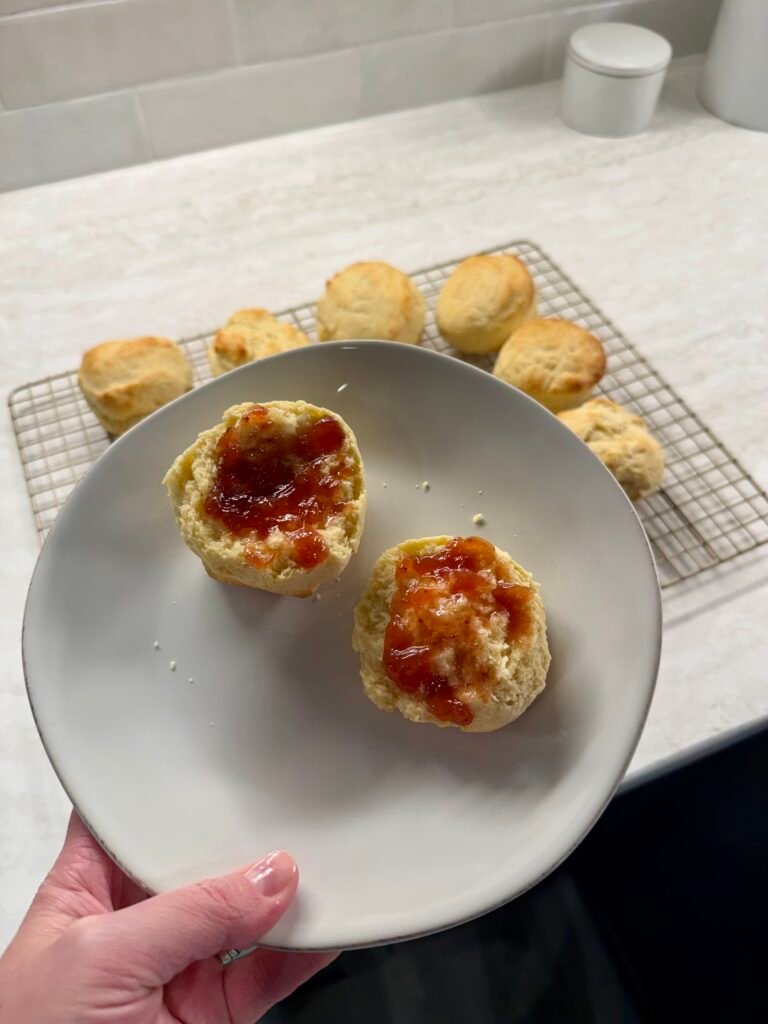
British cheese scones are a savory variation of the classic British scone. They’re light and fluffy inside, with a slightly crisp exterior and plenty of cheddar cheese throughout.
Unlike the sweet scones you’ll often find in American coffee shops, British scones are generally smaller and less sweet. Cheese scones skip the sugar altogether, making them perfect for serving warm with butter or alongside a bowl of soup.
Tips for Light and Fluffy Cheese Scones
The most important thing when making scones is not to make the dough too dry. My grandmother always taught me to judge scone dough by feel rather than relying on an exact amount of milk. You want it soft and slightly sticky, so if the mixture still looks dry and crumbly, add another splash of milk.
Handle the dough as little as possible once it comes together. Rather than using a rolling pin, I just gently squish it out with my hands to about ¾ inch thick. That’s how my grandmother taught me!
You can find more tips for light and fluffy scones in my Classic British Scones recipe.
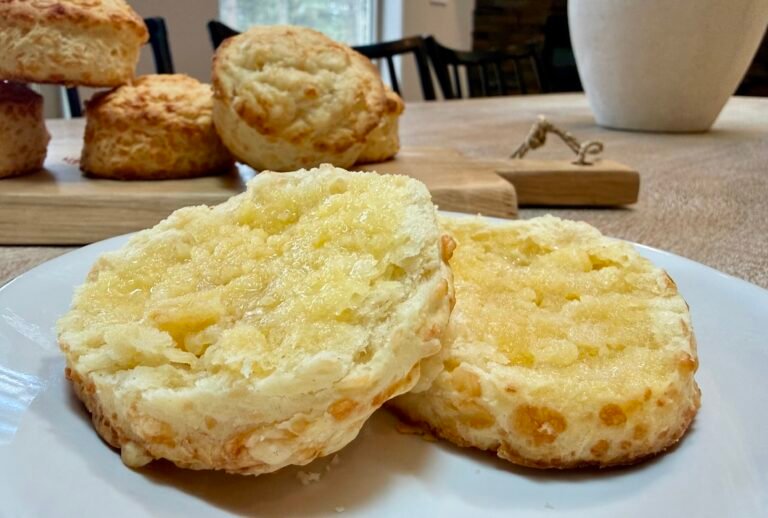
Choosing the Right Cheese
A good, flavorful cheddar makes all the difference in cheese scones. In Britain, I’d use a mature cheddar. Here in the U.S., Trader Joe’s Unexpected Cheddar Cheese is the closest equivalent I’ve found, and it works beautifully in these scones.
Grate the cheese finely so it distributes evenly throughout the dough. I also like to sprinkle a little extra over the tops just before they go into the oven, giving the finished scones a golden, cheesy topping.
Baking Cheese Scones at High Altitude
I developed and tested this recipe in my Colorado mountain kitchen at approximately 8,600 feet above sea level.
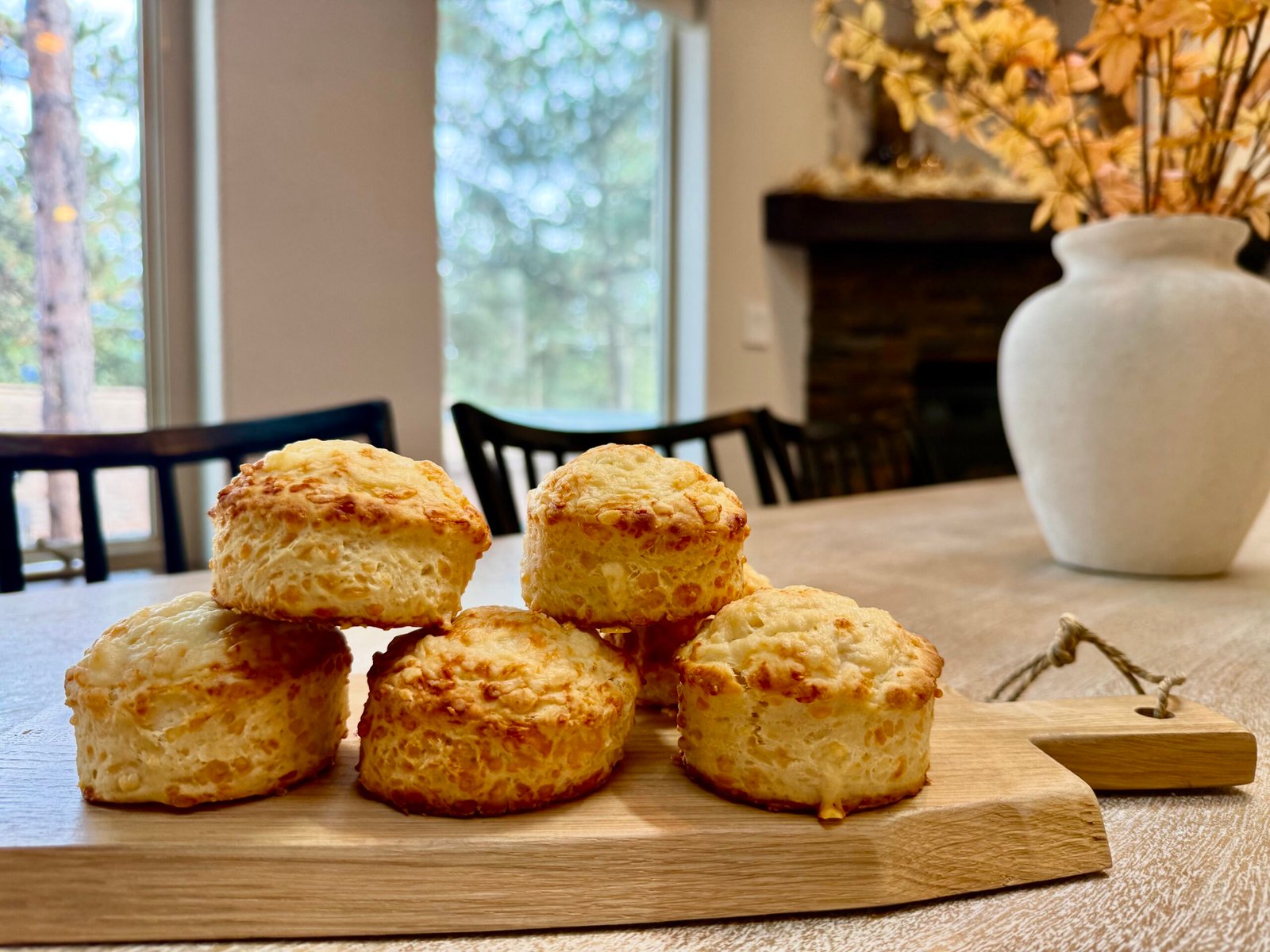
At high altitude, baked goods can rise more quickly before their structure has had time to set. For these scones, I use 2 teaspoons of baking powder and bake them in a hot 425°F oven. Mine were perfectly baked after 14 minutes, with a light, fluffy center and golden cheese on top.
For more information about baking at elevation, see my High-Altitude Baking Guide.
Baking at a lower elevation? If you’re baking closer to sea level, increase the baking powder to 3 teaspoons and add the milk gradually, letting the texture of the dough guide you.
How to Serve Cheese Scones
Cheese scones are particularly good served slightly warm with plenty of salted butter. I also love mine with orange marmalade — the sweetness and citrus pair beautifully with the sharp cheddar.
They’re also lovely alongside a bowl of soup or as part of a simple lunch, but there’s really no need to do much with them. Fresh from the oven with butter is hard to beat.
British Cheese Scones
Ingredients
Equipment
Method
- Preheat the oven to 425°F (220°C). Line a baking sheet with parchment paper.
- In a large bowl, whisk together the flour, baking powder and salt.
- Add the cold, cubed butter. Using your fingertips, lightly rub the butter into the flour until the mixture resembles fine breadcrumbs. Work quickly so the butter stays cold.
- Stir in the finely grated cheddar until evenly distributed.
- In a separate bowl or jug, lightly beat the egg and milk together.
- Gradually stir the egg and milk mixture into the dry ingredients until the dough begins to come together. If it still feels dry or crumbly, add additional cold milk, a splash at a time, until you have a soft, slightly sticky dough.
- Turn the dough onto a lightly floured surface and gently pat it out to approximately ¾ inch (2 cm) thick. There’s no need to use a rolling pin.
- Dip a 2½-inch round cutter in flour and press it straight down through the dough, then lift it straight back up. Don’t twist the cutter. Gently bring the scraps together and repeat. You should get approximately 6 large scones.
- Arrange the scones fairly close together on the prepared baking sheet. Brush the tops with a little milk, being careful not to let it run down the sides. Sprinkle each scone with additional grated cheddar.
- Bake for 13–15 minutes, beginning to check at 13 minutes. The scones should be well risen and golden, with the cheese on top melted and lightly browned.
- Transfer the scones to a wire rack and cool for about 10 minutes before serving slightly warm topped with butter.
Notes
Want more recipes like this?
Get new British-inspired recipes and high-altitude baking tips straight to your inbox.